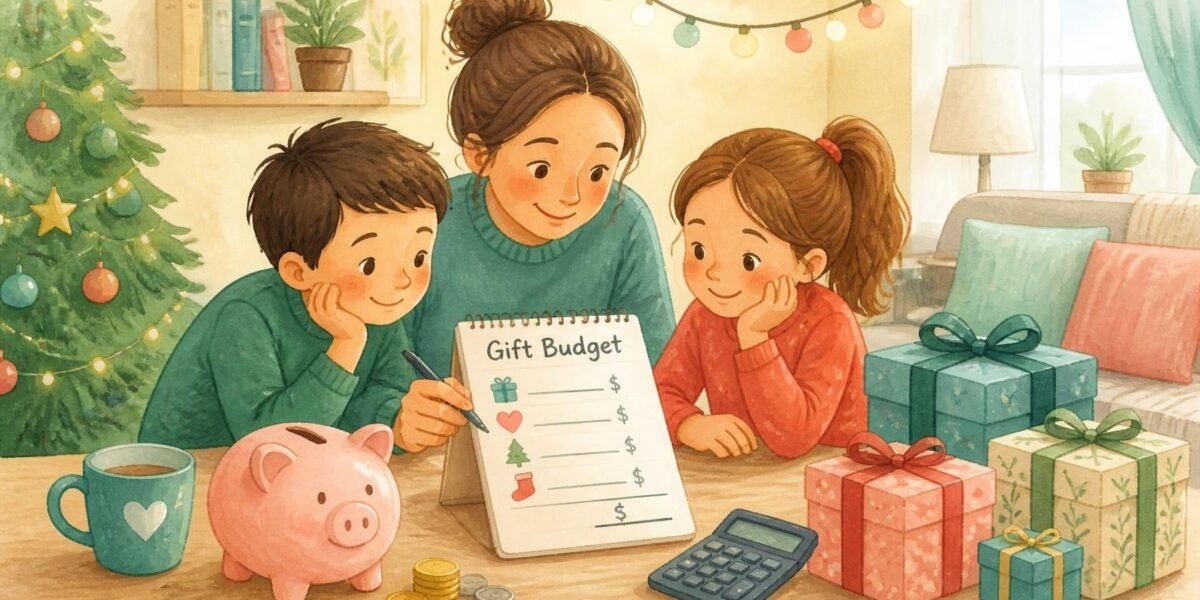
Mid-October is a smart time to set a holiday gift budget for kids—before ads, wish lists, and last-minute shopping take over. A simple plan helps children learn to list recipients, set a spend cap, and make tradeoffs. It also lowers December money stress for parents.
You do not need a perfect spreadsheet. You need a clear total, a short list, and age-appropriate practice. The Consumer Financial Protection Bureau (CFPB) encourages families to use the holidays to talk about prices, priorities, and planning ahead. The FDIC’s Money Smart for Young People materials treat budgeting as a skill children can practice with real choices.
Why plan the holiday gift budget in October
Waiting until December often means hurried purchases, forgotten recipients, and credit-card catch-up in January. Starting now gives your family time to:
- Agree on a total gift spend that still covers regular bills
- Involve kids in list-making before catalogs and social media amplify every want
- Compare prices and choose lower-cost or handmade options without panic
- Track what was actually spent and adjust before the season ends
The FDIC’s holiday banking guidance suggests making a gift list, assigning an intended amount for each person, comparing prices, then checking off purchases and recording what you spent. That same habit works well when kids help.
Set the family gift spend cap first
Adults decide the household total. Children can help with their own lists and caps once that number is set. The CFPB’s holiday spending advice is straightforward: cover typical expenses first, estimate hosting or travel costs, then decide how much remains for gifts—and start as early as you can.
- Write your non-negotiables. Rent or mortgage, utilities, groceries, insurance, debt payments, childcare, and transportation stay first.
- Estimate seasonal extras. Travel, hosting, wrapping, shipping, school parties, and teacher gifts add up quickly.
- Choose a total gift cap. Pick an amount you can fund with cash or money already set aside—not hope for a December bonus.
- Split the total by category. Example: kids’ gifts, partner/parents, extended family, teachers/coaches, and a small buffer for shipping or forgotten obligations.
If money is tight this year, keep the conversation calm and age-appropriate. Our guide on how to talk to kids when money is tight can help you explain limits without making children responsible for adult bills.
Use the free Monthly Budget Planner to see where gift money fits alongside everyday expenses before you shop.
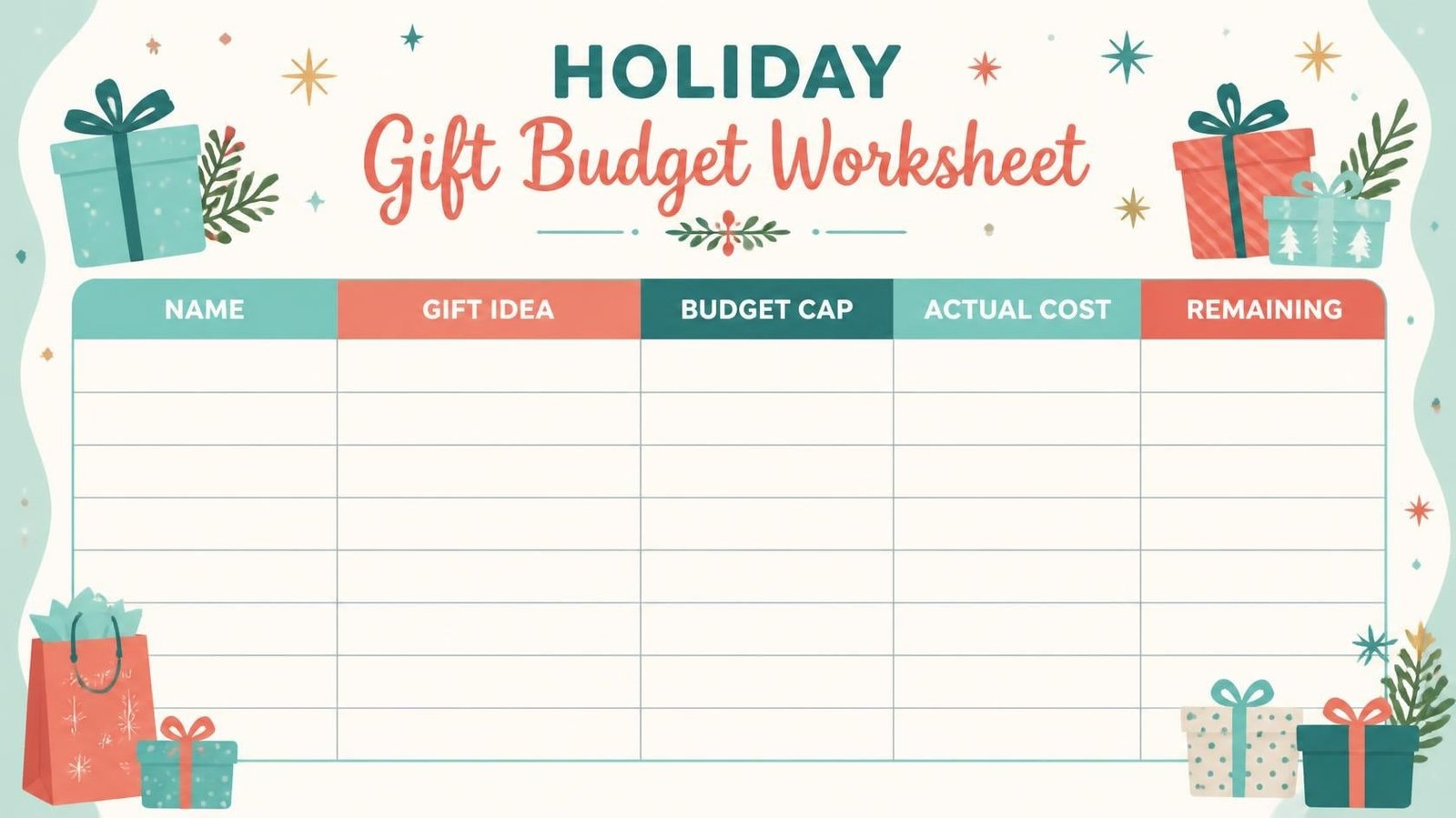
Simple holiday gift budget worksheet
Create one shared list for the household. Keep columns simple so kids can help fill them in:
| Recipient | Gift idea | Budget cap | Actual cost | Notes |
|---|---|---|---|---|
| Grandma | Photo book | $25 | Print by Dec. 10 | |
| Sibling | Board game | $20 | Compare two stores | |
| Teacher | Handmade card + cocoa mix | $8 | No store gift needed | |
| Buffer | Shipping / forgotten gifts | $30 | Use only if needed |
Rules that keep the worksheet useful:
- If it is not on the list, do not buy it (sales included).
- When an idea costs more than the cap, choose a smaller version, make something, or reallocate from the buffer—do not silently raise the total.
- Check off each gift and write the actual cost the day you buy it.
- Review the running total once a week until the holidays arrive.
A short family money meeting is a good place to update the list without turning every evening into a money talk.
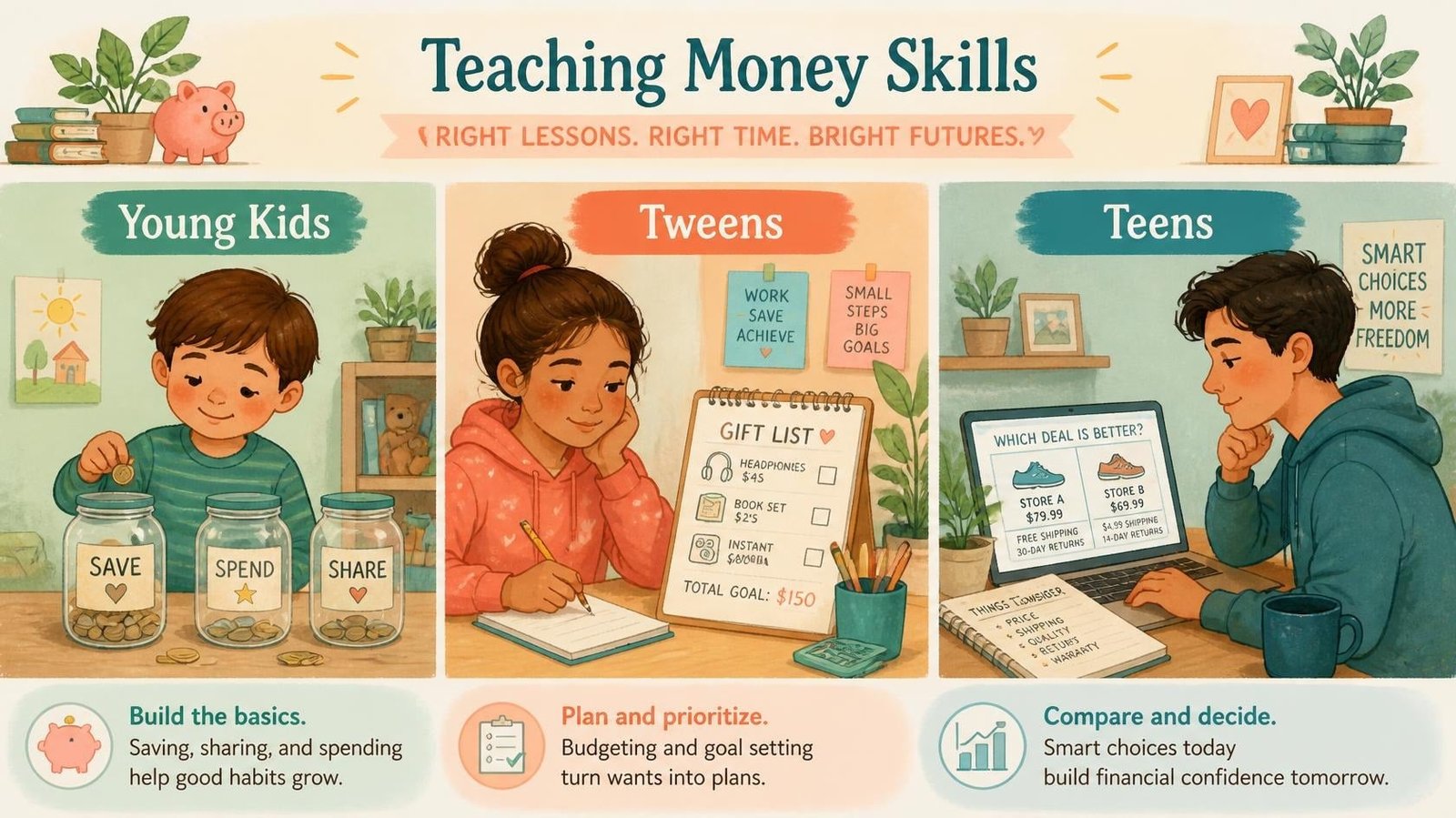
Age-by-age tips for holiday gift budgeting
Money skills grow with practice. Use the ideas below as a flexible guide, then adjust for your child’s readiness. For a broader progression, see our money skills checklist by age.
Young kids (about ages 5–8)
Keep it concrete and short. Young children often do not naturally think about prices, so the CFPB suggests using holiday moments to talk about cost and saying no when a gift is not in the plan.
- Let them name 2–4 people they want to give something to.
- Give each person a small cap you choose (for example, $5–$15).
- Offer two acceptable options under the cap and let the child choose.
- Use physical coins or a labeled envelope so the limit is visible.
- Celebrate handmade gifts—drawings, coupons for help, baked treats—as fully “real” gifts.
If your child already uses save, spend, and give jars, the “give” jar can fund sibling or teacher gifts within the family rules.
Tweens (about ages 9–12)
Tweens can handle a fuller list and simple tradeoffs. The CFPB’s Money as You Grow shopping activities practice setting a limit, choosing items, totaling costs, and revising choices when the total runs over—skills that transfer directly to holiday gifts.
- Have them draft the recipient list, then assign a cap to each name.
- Ask them to total the caps before shopping begins.
- Practice comparison shopping for one item (two stores or two online listings).
- Discuss needs versus wants for gifts they hope to receive, not only gifts they give.
- If they want a higher-cost gift for someone, help them earn or save toward that one amount.
Allowance can fund part of giving practice. Start with a sustainable amount from how much allowance by age, then decide together how much of December’s money goes to gifts versus other spending.
Teens (about ages 13–18)
Teens can own more of the plan: list, caps, price checks, and tracking. The CFPB notes that older kids benefit from seeing how adults set priorities and make tradeoffs—such as preferring one meaningful gift over several smaller ones.
- Share the household gift total in broad terms (“We are keeping gifts within $X”) without dumping adult debt details.
- Let teens manage their own gift subtotal from job income, allowance, or savings.
- Require a written list before any shopping trip or online cart.
- Review shipping, taxes, and return policies before checkout.
- Connect the exercise to broader teen money skills in our money management for teens guide.
If a teen is saving toward a gift goal, use the Savings Goal Calculator and the steps in how to help a child finish a savings goal.
How kids can fund gifts without new debt
Parents still cover essential family gifts when children are young. When kids contribute, keep the stakes small and the funding sources clear:
- A portion of allowance or chore income set aside as “give”
- Money already saved for holiday giving
- Handmade gifts that cost little but take time and thought
- Group gifts with siblings to stay under a shared cap
Avoid inventing apps or accounts that collect a child’s personal data. Paper lists, shared family notes, envelopes, and adult-controlled tools you already use are enough.
Common holiday gift budget pitfalls
- No total before shopping. Deals feel like savings even when the purchase was never planned.
- Invisible extras. Wrapping, batteries, shipping, and party contributions can blow a carefully set gift line.
- Uneven sibling expectations. Agree on fairness rules early—equal dollars, equal number of gifts, or equal “experience” value.
- Secretly topping up. Quietly covering overspending removes the lesson. Adjust the list before the purchase instead.
- Skipping the review. Comparing planned versus actual amounts after the holidays strengthens next year’s plan.
FAQ
How much should we spend on holiday gifts for kids?
There is no universal number. Choose a total your household can afford after essentials, then divide it by recipient. Surveys of parents vary widely by income and family size, so treat averages as curiosity—not a target.
Should kids know the dollar amount for their own gifts?
Often it helps tweens and teens understand tradeoffs. For younger kids, focus on “we planned for a few special things” rather than exact dollar totals for gifts they will receive.
What if grandparents want to spend more than our plan?
Thank them, share your family’s preference (for example, one main gift plus experiences), and suggest wishlist categories or shared experiences when needed. You can still keep your own spending on track.
Is it okay if some gifts are handmade?
Yes. Meaningful gifts do not require a high price. The CFPB has highlighted low-cost and homemade ideas as valid ways to give within a budget.
How do we involve kids without overwhelming them?
One short planning session, one list, and one weekly check-in are enough. Stop before frustration sets in, and return to the worksheet later.
Put the plan into action this week
Block 20–30 minutes this week to set the household gift cap, draft the recipient list, and assign amounts. Invite each child to fill in the people they will give to, within the caps you approve. Then schedule one mid-November review.
Ready to see how gift spending fits the rest of your month? Open the Monthly Budget Planner, then keep kids practicing with save, spend, and give jars year-round.
Sources
- FDIC: Money Smart for Young People
- FDIC: Banking on the Holidays
- CFPB Money as You Grow: School-age children and shopping
- CFPB: Help your kids build solid money habits this holiday season
- CFPB: A five-step spending plan to avoid holiday debt
This article is for educational purposes and does not provide individualized financial, tax, legal, or investment advice.




Leave a Reply