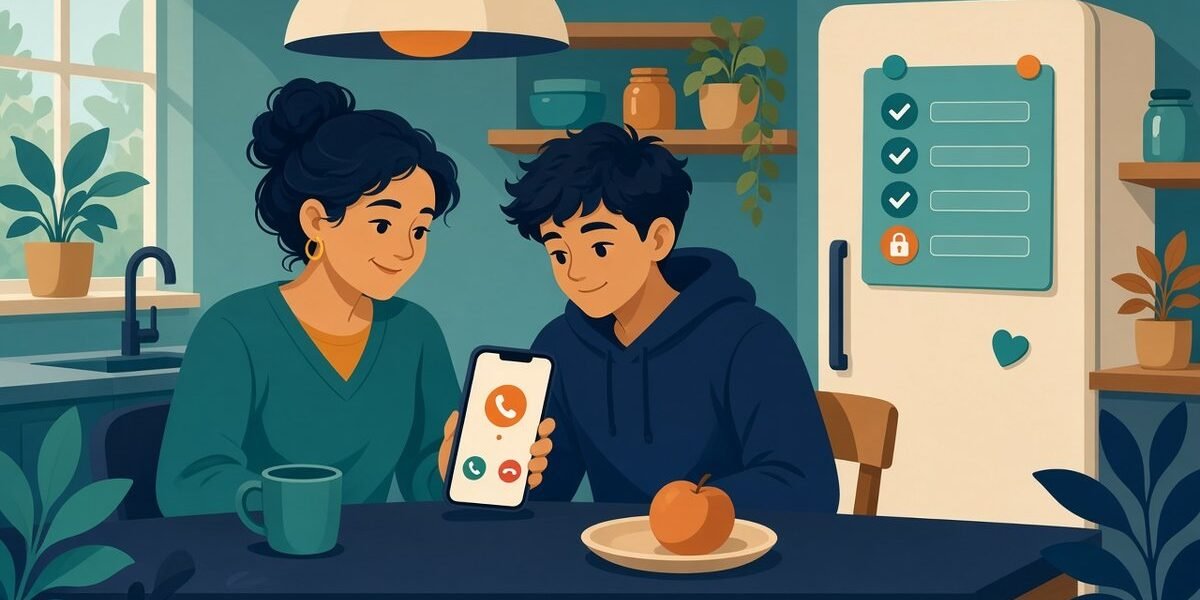
AI voice cloning scams can make a fake emergency call sound like someone you love. A familiar voice is not proof that the caller is your child, partner, or grandparent. The most useful family rule is to pause and verify an urgent money request through a separate, trusted contact route.
Editorial update, September 2026: We removed unsupported statistics about scam growth and detection accuracy. This guide now focuses on official FTC guidance and a practical family response plan.
Recognize the pressure in AI voice cloning scams
The FTC warns that fake family emergencies may involve a cloned voice, an invented authority figure, and pressure to pay immediately. A caller may demand secrecy or ask for a wire transfer, cryptocurrency, gift cards, or a payment-app transfer.
You do not have to decide whether the audio sounds artificial. Treat the request as unverified until you reach the person independently. Names, personal details, or a familiar-looking caller ID are not enough to establish who is speaking.
Use a callback plan before sending money
End the call and contact your family member using a number you already know. Do not use a new number supplied during the suspicious conversation. If you cannot reach them, check with another trusted person who may know where they are.
If someone claims to represent a hospital, police department, or other organization, find its official contact details yourself. If you believe someone may be in immediate danger, contact emergency services through the appropriate local number.
Make a family contact card
Set aside ten minutes to agree on a plan before a stressful call occurs. Write down two trusted people each family member can contact, along with numbers confirmed directly with them. Keep the card somewhere accessible, especially for relatives who do not use a smartphone.
Add a simple reminder: “Pause. End the call. Use my saved contacts.” The card should help someone take the next step even if they feel frightened. Keep account passwords, bank details, and other sensitive information off it.
Check the numbers after a move, a new phone, or a change in caregiving arrangements. Also discuss what to do if the first person does not answer. One missed call should lead to another verification step, not an immediate transfer.
Practice a calm response to AI voice cloning scams
Use an announced role-play, not a surprise fake emergency. One person says, “I need money right now, and you cannot tell anyone.” The other practices answering, “I am going to check this through our usual contact.” Then they point to the number they would use.
Afterward, ask what made the request feel urgent and what helped them pause. Invite children and older relatives to ask questions without teasing anyone for finding the scenario convincing. The exercise is about following a plan under pressure, not testing someone’s intelligence.
A private family phrase can be an extra check, but it should not replace a callback. A phrase may be exposed or learned. Keep verification steps in place even if a caller gives an answer you recognize.
If money or account information was shared
Act promptly. The FTC’s steps for people who were scammed explain whom to contact for different payment methods and types of information exposure. Contact the bank, card issuer, or payment service through official channels and ask what recovery or account-protection options remain.
Save receipts, messages, numbers, and transaction details. Report suspected fraud at ReportFraud.ftc.gov. Recovery is not guaranteed. Be cautious of anyone who asks for a fee to recover money or claims they can guarantee it.
Keep the lesson part of normal family money conversations
Choose one habit to practice this week: update trusted numbers, rehearse the callback step, or show a relative where the contact card lives. Revisit it during a family money meeting without sharing private account details.
For teens handling online purchases and transfers, our payment-app and online shopping safety guide covers those everyday situations. The shared principle is the same: verify the person and the request before money moves.




Leave a Reply