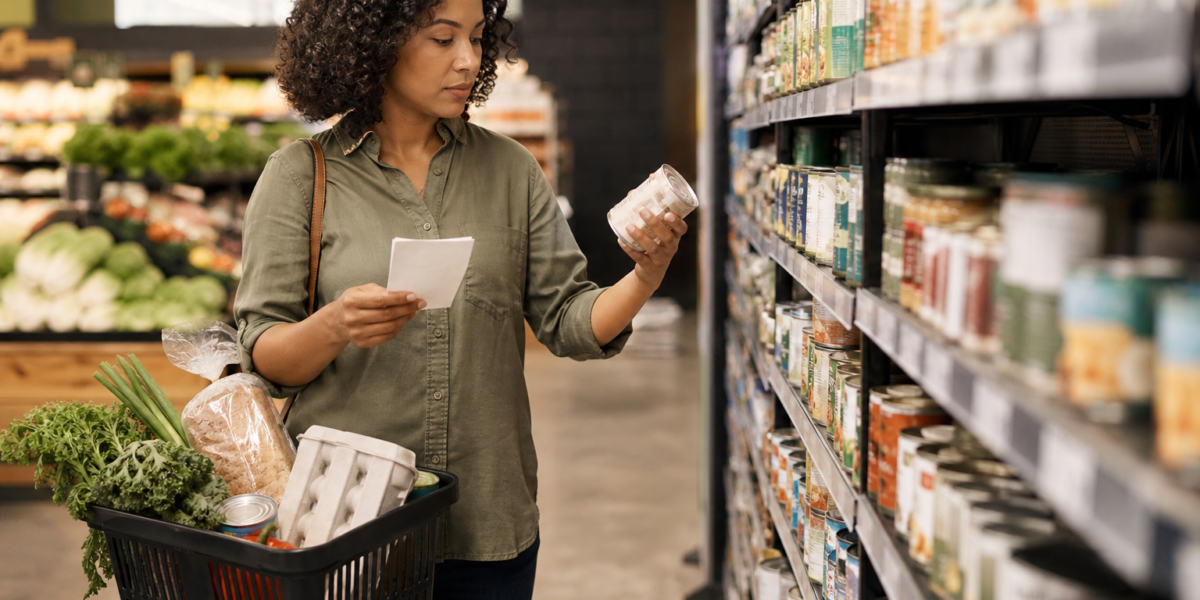
A family grocery budget should start with the meals your household needs and the prices you actually pay. When receipts rise, a national inflation figure can explain the background, but it cannot tell you which item to change or how much cash is available this week.
This guide shows how to review receipts, choose useful substitutions, and plan a realistic shopping trip. It is an adult household planning guide; use our family money activities when you want a short lesson to try with children.
Use current prices, not an old forecast
The USDA Food Price Outlook updates its forecasts as conditions change. Grocery categories do not all move together, and an annual national forecast is not a prediction for a specific store or basket.
Editorial update, September 2026: We removed older category forecasts and unsupported tariff estimates from this article. Check the dated USDA release for current national figures, then use your receipts for the household plan.
Build a family grocery budget from recent receipts
Collect several recent weeks of grocery receipts or transaction records. Separate food from items such as cleaning supplies, toiletries, and pet food if you want to track those elsewhere. Also decide whether takeout belongs in a separate category. Use the same definitions each week so the comparison means something.
Next, note unusual purchases. A large pantry restock or a holiday meal can make one week a poor starting point for every week. Record those costs, but distinguish regular meals from occasional spending.
Compare the total with the money available after other essential bills. If the gap is large, tiny coupon savings may not solve it. Review the full household plan with the Monthly Budget Planner and consider the support options below.
Make a meal plan that fits this week’s schedule
Check the pantry, refrigerator, and freezer before shopping. Then plan meals around the days you will actually be home and the time you have to cook. The USDA’s budget food resources offer meal-planning and shopping ideas.
Choose a backup meal using foods your household already accepts. A plan that depends on cooking from scratch after every late shift may be hard to keep. Account for dietary needs, allergies, storage, and access to cooking equipment when comparing options.
Compare unit price and total cash needed
Illustrative example: A 16-ounce package costs $2.40, or 15 cents per ounce. A 32-ounce package costs $4, or 12.5 cents per ounce. The larger package has the lower unit price, but buying it requires $1.60 more today.
If you will use both halves and can afford the $4, the larger package may fit. If half will go unused or the extra cash is needed for another meal, the smaller package may be the practical choice. Compare like units and amounts you will actually use.
Keep a short price list for five regular purchases. Record the size, total price, store, and date. This can reveal a package-size change or a sale that is not as useful as the label suggests.
Adjust the family grocery budget with a worked example
Suppose the planned basket costs $110 and the available amount is $100. Using pantry ingredients removes a $6 duplicate purchase. Choosing a different planned snack saves $4. The revised basket fits the $100 limit without assuming that every item can be cut.
These are invented figures. The useful step is naming the change before checkout. Keep an estimate as you shop, including any applicable tax or delivery fees, and leave room for price differences when possible.
A child can help compare two suitable options, but the adult sets the limits. If a smaller grocery plan reflects a difficult period, our guide to talking with kids when money is tight offers simple words for explaining the change.
Review waste and get help when the gap remains
At the end of the week, note what went unused and why. Did plans change, was the package too large, or did the family dislike the meal? Adjust the next list using that information instead of buying the same unwanted bargain again.
If there is not enough money for food, check official family assistance resources for programs such as SNAP, WIC, and school meals. Eligibility differs by program. Ask your child’s school or a local community organization about available food support.
Finally, compare planned and actual spending on a regular day each week. Update the family grocery budget when household needs or prices change. The aim is a usable meal plan and a clearer cash picture, not an unrealistically low number on paper.




Leave a Reply